
Why Is My Roof Leaking After Winter Storms? Ice Dams Explained
You notice a dark spot spreading across your bedroom ceiling. Or maybe water is dripping near a window frame, even though the forecast has been dry for days. Your first thought is probably, "Is my roof leaking?" The answer might be yes, but not in the way you'd expect.
During Kansas City winters, roof leaks often have nothing to do with missing shingles or storm damage. Instead, they're caused by something called an ice dam: a buildup of ice along your roof's edge that traps water and forces it into places it was never meant to go. If you're experiencing mysterious winter leaks, understanding ice dams could save you thousands of dollars in repairs and a whole lot of stress.
What Exactly Is An Ice Dam?
An ice dam is a ridge of ice that forms along the lower edge of your roof, usually right above the gutters. While it might look like a harmless winter decoration, this ice barrier creates a serious problem. It blocks melting snow from draining off your roof, and that trapped water has to go somewhere. Unfortunately, "somewhere" often means underneath your shingles and into your home.
The frustrating part? Ice dams can cause leaks even when your roof is in perfect condition. The water isn't coming through a hole or a damaged area. It's being pushed under your roofing materials by the weight of water pooling behind the ice.
How Ice Dams Form: The Science Behind The Problem
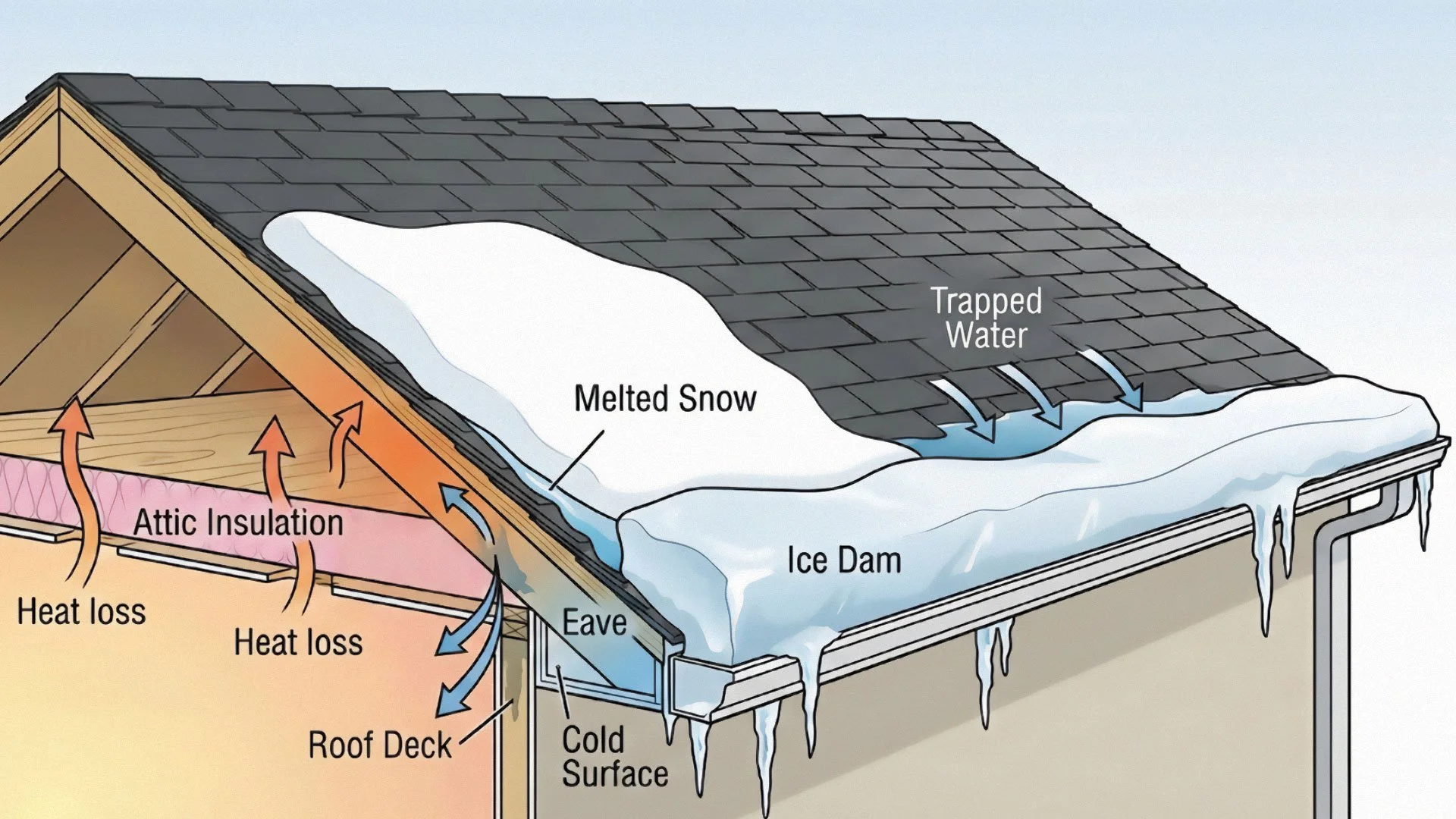
The process starts inside your home. Heat from your living spaces rises and escapes into the attic through gaps around light fixtures, plumbing vents, attic hatches, and areas where insulation has settled or shifted. This escaped heat warms the underside of your roof deck. When snow sits on your roof, the warmer sections begin to melt from below, even when outside temperatures are well below freezing.
Here's where it gets interesting. The melted snow flows downward as water, traveling beneath the remaining snow layer. When this water reaches the eaves (the part of your roof that extends past your exterior walls), it hits a cold zone. The eaves don't have a warm attic beneath them, so they stay at or below freezing. The water refreezes, forming the beginning of an ice dam.
This cycle repeats over days or weeks. More snow melts above, flows down, and refreezes at the edge. The dam grows thicker. Eventually, a pool of liquid water builds up behind the ice barrier with nowhere to drain. Under pressure, this water works its way under shingles through a process called capillary action, finding every nail hole, seam, and gap it can exploit.
The result? Water inside your home that seems to appear out of nowhere, often during a sunny afternoon when some of the ice begins to melt.
Schedule an Appointment Now
Ice dams start with heat escaping through your ceiling. The problem is, most homeowners have no idea where the leaks are until water shows up inside. A professional attic inspection from Helio GreenTech can pinpoint exactly where your home is losing heat so you can stop ice dams before they start.
Why Kansas City Homes Are At Risk for Ice Dams
Kansas City's climate creates nearly ideal conditions for ice dam formation. We don't get the consistent deep freezes of Minnesota or the mild winters of the South. Instead, Kansas City winters bring temperature swings: 30°F one night, 45°F the next afternoon, then back down to 20°F. This constant fluctuation between freezing and thawing drives the melt-refreeze cycle that ice dams depend on.
Many Kansas City homes, particularly in established neighborhoods, were built before modern insulation and air-sealing standards became common. Older homes often have attic bypasses (hidden pathways where warm air escapes into the attic) that newer construction avoids. If your home was built before the 1980s, there's a good chance your attic isn't as airtight as it could be, which increases the likelihood of ice dam formation.
Warning Signs That Ice Dams Are Damaging Your Roof
Knowing what to look for helps you catch ice dam problems before they cause serious interior damage.
Outside Your Home
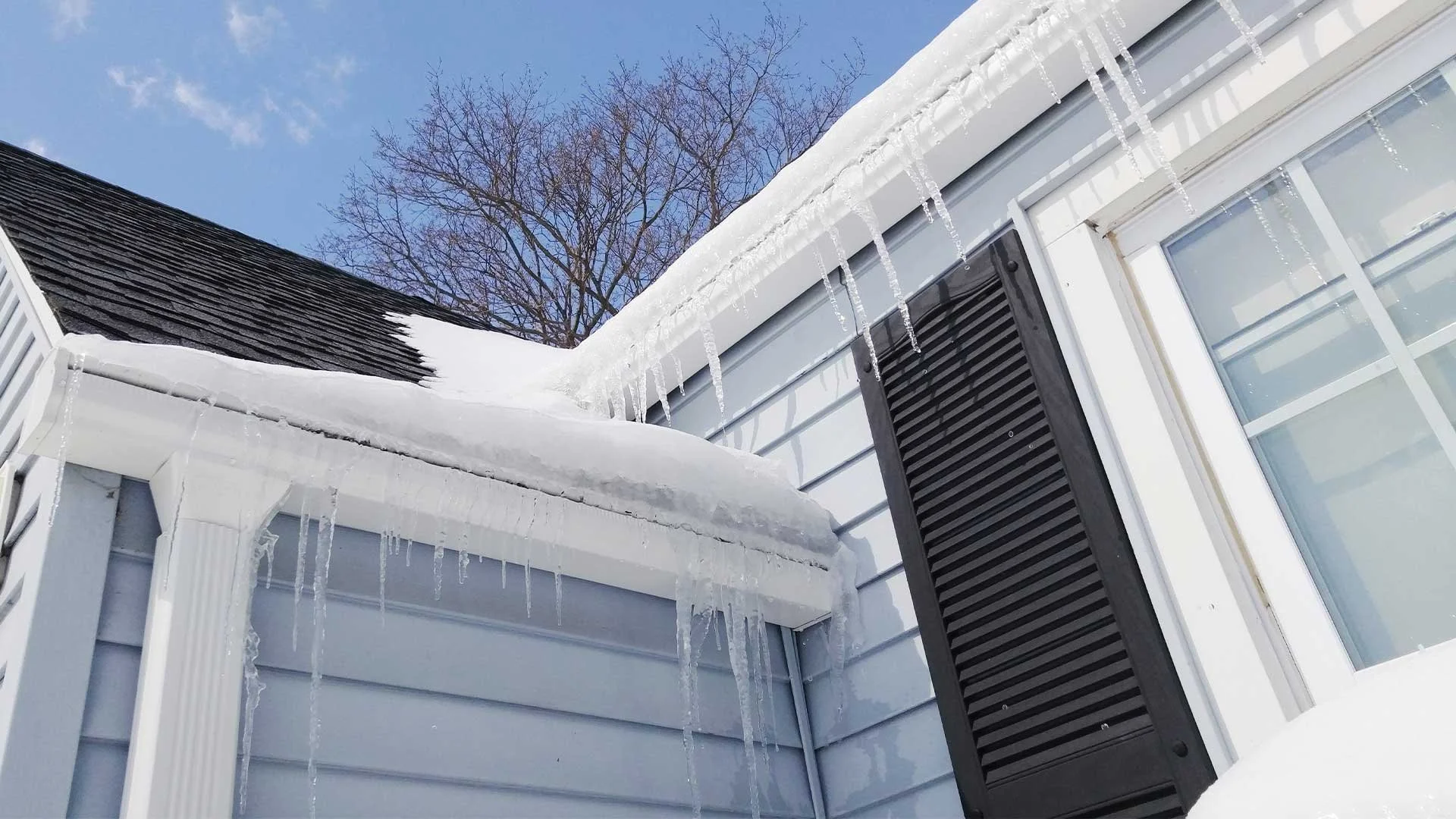
Thick ice ridge along the roof's edge: The defining sign of an active ice dam, often accompanied by large icicles hanging from gutters
Oversized or numerous icicles: More icicles mean more heat escaping from your attic and more water feeding the dam
Uneven snow coverage: Bare or melted patches near the roof peak while lower sections stay snow-covered reveals where heat is escaping
Inside Your Home
Ceiling water stains: Often brownish, circular, or spreading outward, most common in rooms directly beneath the roof edge
Peeling or bubbling paint: Especially on walls or ceilings near exterior walls
Damp spots around windows: Or in corners where walls meet ceilings
Water dripping from light fixtures: This requires immediate attention due to electrical safety hazards
Inside Your Attic
Frost or ice on the underside of the roof sheathing: Confirms moisture is reaching the roof deck
Wet or compressed insulation: Especially near the eaves, where ice dams form
Water staining on wooden framing: Indicates water is finding its way into spaces that should stay dry
Noticed Any Of These Warning Signs?
If you're seeing ice ridges on your roof or water stains inside your home, don't wait for the damage to get worse. Helio GreenTech offers free roof and attic inspections to Kansas City homeowners so you can get answers fast and know exactly what you're dealing with.
What To Do If You Suspect Ice Dam Damage
First and most importantly: stay off your roof. Icy conditions make roofs extremely dangerous, and the risk of falls far outweighs any benefit of DIY removal. Similarly, avoid chipping away at ice dams with hammers, ice picks, or other tools. It's remarkably easy to damage shingles this way, turning a temporary problem into permanent roof damage.
Inside your home, place containers to catch any active drips and move furniture or valuables away from affected areas. If water is accumulating on the ceiling, you may need to carefully puncture a small drainage hole at the lowest point of the bulge to relieve pressure and direct the water. This isn't ideal, but it's better than waiting for the ceiling to collapse unexpectedly.
Keep your attic cold by ensuring attic access doors are properly sealed and avoiding any temptation to heat the attic space directly. Running additional heat into the attic will actually accelerate snowmelt and worsen the ice-dam cycle.
When Professional Help Makes Sense
Ice dam removal is best left to professionals with the right equipment and experience. The safest removal method uses low-pressure steam to melt the ice without damaging your roofing materials. This approach eliminates the ice dam and allows trapped water to drain, stopping active leaks relatively quickly.
This is where working with an experienced local team like Helio GreenTech makes a real difference. Although professional ice dam removal typically costs several hundred dollars, that investment is far less than the repair bills that can result from weeks of water intrusion or roof damage from aggressive DIY attempts. In addition to emergency removal, a professional inspection can pinpoint why your home is forming ice dams in the first place. Whether due to inadequate insulation, air leaks, or ventilation issues, you can address the root cause rather than just treating symptoms each winter.
Preventing Ice Dams: Long-Term Solutions That Actually Work
While dealing with an active ice dam requires professional intervention, preventing future ice dams is something you can address proactively. The key is stopping heat from escaping into your attic in the first place.
Air Sealing: Sealing gaps where warm air escapes into your attic greatly reduces heat loss that causes ice dams. Focus on sealing gaps around electrical wires, plumbing vents, recessed lights, attic hatches or pull-down stairs, and places where ducts pass through ceilings. Professional energy auditors can use tools such as blower door tests and infrared cameras to pinpoint where your home is leaking heat.
Insulation Improvements: Adequate attic insulation keeps heat inside your living spaces rather than letting it escape through the ceiling. Our climate calls for at least R-38 insulation, with R-50 ideal where attic space allows, but many older Kansas City homes have only about R-19 or less. When upgrading, consistency is as important as total R-value; gaps, thin or compressed spots, and shifted areas let heat escape. Blown-in insulation typically provides more complete coverage than batt insulation, especially in attics with irregular framing or many obstructions.
Proper Attic Ventilation: A properly ventilated attic stays cold in winter because outdoor air can move freely beneath the roof deck, carrying away any heat that slips through the insulation. Standard practice is to use balanced ventilation, with intake vents at the soffits (along the eaves) and exhaust vents at the ridge. This configuration promotes natural airflow, keeping the entire roof surface at a consistent temperature and preventing the warm-cold differences that can cause ice dams.
Schedule Your FREE Roof & Attic Insepction
Every roof and attic is different. Some homes are well protected against ice dams, while others have hidden vulnerabilities waiting for the next cold snap. At Helio GreenTech, we help Kansas City homeowners catch small issues before they become costly repairs. Our FREE inspection covers your roof's condition, your attic's insulation and air sealing, and any current or potential ice dam damage. No pressure, no obligation, just straightforward answers so you can protect your home with confidence.
